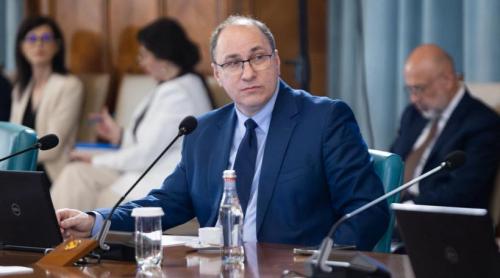

According to Agerpres, Iuga pointed out that Romania's export capacity is largely dependent on the development of its infrastructure.
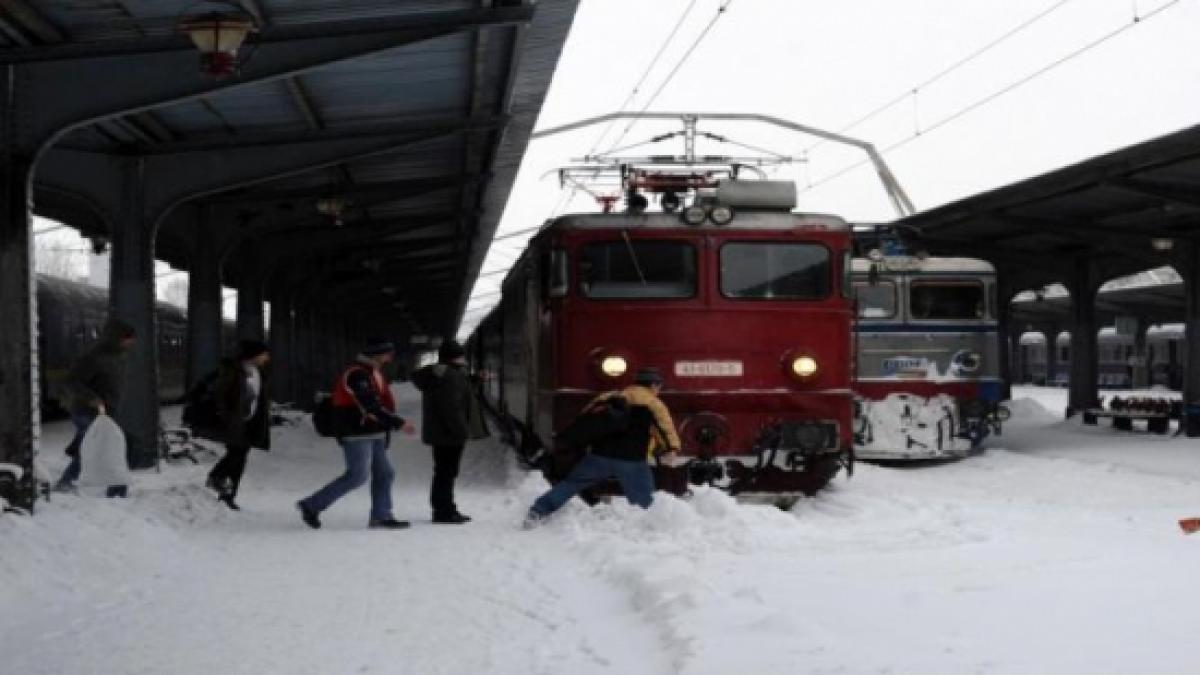
‘We are all proud of the Dacia company's export success. Currently, Dacia delivers annually for exportation over 300,000 car or car parts to be assembled in other Dacia factories in Morocco, Russia, India and Colombia. How many do know, however, that it takes around 30 hours for the trains loaded with cars leaving weekly from the factory in Mioveni on the route Craiova - Lugoj - Nădlac to get to the Hungarian border? That is as much as it takes them to get further on to the consumers in Western Europe. Basically, the trains in Romania run at the same speed as in Caragiale’s times '' remarked Vasile Iuga.
Besides the EU funds, part of the necessary infrastructure investments could be covered by attracting private funding, so we need a Public Private Partnership Law that is modern, flexible and functional.
Moreover, private sector’s involvement would bring technical expertise and project management capabilities needed for the development of large infrastructure projects.
"So far, Romania has had two missed opportunities in terms of PPP. Both the law of 2006 and the one in 2010, proved inapplicable. For example, restricting participation of public funds, both in the investment and during the period of its operation, made almost impossible the financial layout of projects, because not all projects can be viable only through gross receipts from the users' explained Iuga.
In the process of amending PPP legislation, PwC representative said that "" it is gratifying that the new text'' bill removes this hurdle and makes a clear distinction between projects structured as public-private partnerships and concessions.
In his opinion, in order to attract private investors in investment projects, we have taken into account the financial viability of the project, the ability of investors to obtain a reasonable profit to justify the opportunity cost of resources committed to the project.
Also, such projects must have public funding provided by the inclusion of these costs in the budget for all the years of building and running the project, said Vasile Iuga.
Moreover, we also need political support for private sector involvement in infrastructure projects, especially as there is no tradition of such projects, and users are not accustomed to them
"Finally, it requires close collaboration between public and private stakeholders throughout the project implementation and a fair sharing of risk between the two partners," concluded Iuga.
The minister delegate for Infrastructure Projects and Foreign Investments, Dan Şova attended the seminars along other representatives of the public administration.
Ştiri video recomandate